How to Run a Gifted Creator Campaign: The Complete Brand Guide
Isabel Sachs
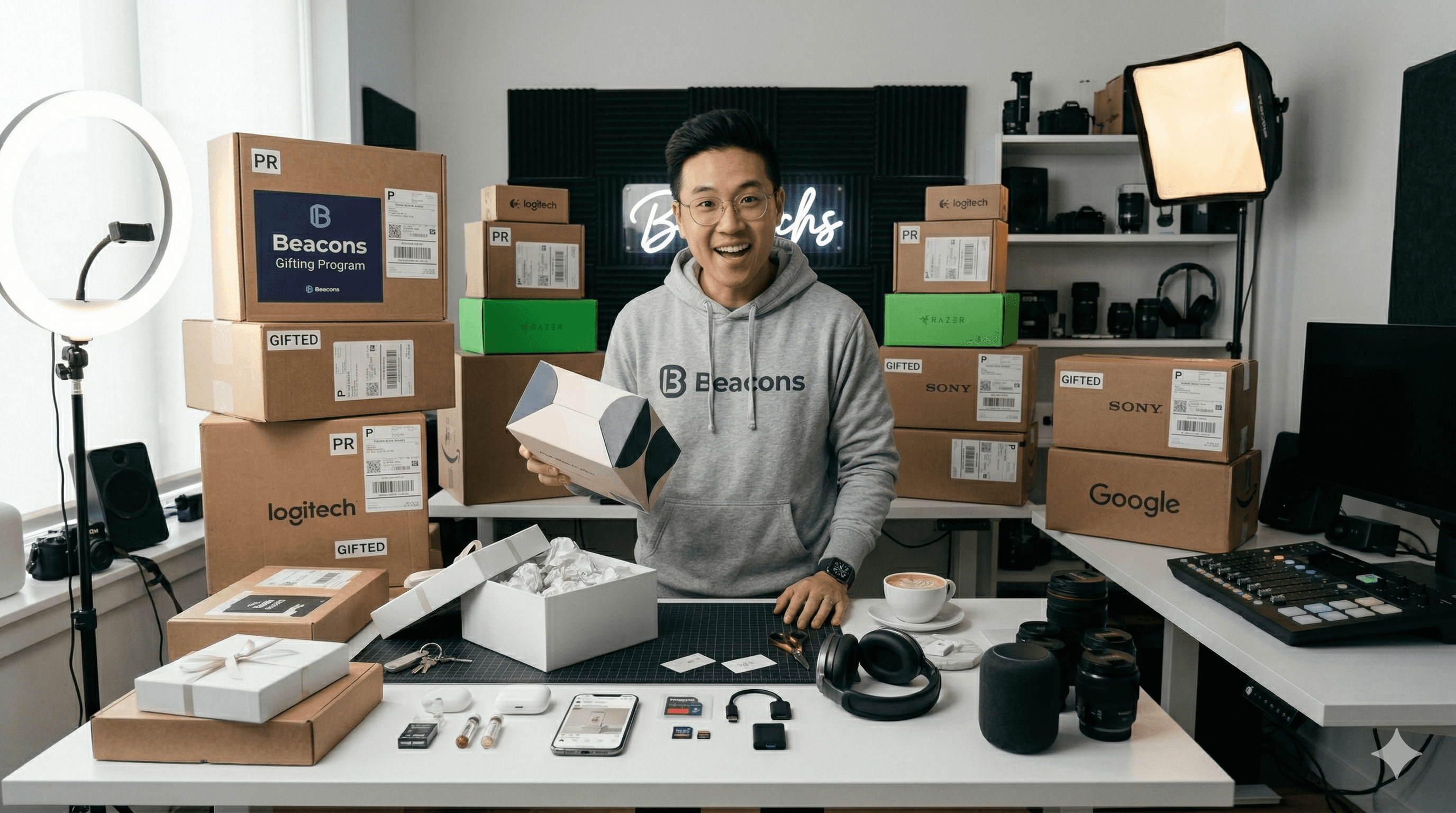
Influencer gifting gets written off as a soft awareness play — nice for visibility, hard to measure. That's outdated. When you match the right creators with a clear brief and a solid operational workflow, gifted campaigns can deliver paid-social-level efficiency while producing authentic content you can actually reuse.
This is true whether you're a beauty brand launching a new SKU, an AI company seeding a developer tool with tech creators, or a DTC brand building social proof for a product launch. The fundamentals are the same — the vertical just changes which creators you target and which platforms matter most.
📊 From the Beacons Data: Across the 7M+ creators on our platform, we see gifted campaigns consistently outperform expectations when brand-creator affinity is high. One campaign run through Beacons delivered a ~$10 effective CPM — right in line with paid social benchmarks — plus reusable content the brand continued using for months afterward.
This guide covers everything you need to plan, execute, and measure a gifted creator campaign from start to finish — informed by real campaign data from thousands of creator partnerships managed through Beacons.
What Is a Gifted Creator Campaign?
A gifted campaign is a form of influencer marketing where you send free products to creators in exchange for organic content. Because creators aren't locked into a rigid contract, the content tends to feel more natural and native to their audience — which is exactly what drives real engagement.
Gifted campaigns work especially well when you want to build awareness around a new product launch, create a wave of social proof across multiple creators at once, test creator partnerships before committing to paid deals, or build a pipeline of creators who genuinely love the product.
For AI and tech companies specifically, gifted campaigns look a bit different than in traditional consumer verticals — but the strategy is the same. Instead of shipping a physical product, you might offer extended free access to a tool, an exclusive beta invite, premium account credits, or early access to a new feature. The "gift" is access and exclusivity, not a box. Tech creators on YouTube, LinkedIn, and X respond strongly to this approach because it gives them something to demo and review — the content format that drives the most engagement in tech.
How Gifted Compares to Paid and Affiliate Campaigns
If you're deciding between gifted, paid, or affiliate creator campaigns, here's how they stack up:
Gifted campaigns have the lowest cost (product or access + shipping only), produce the most authentic content, and work best for awareness, product launches, and testing new creator relationships. The tradeoff: you have less control over if and when creators post.
Paid campaigns give you guaranteed deliverables, creative control, and specific timelines. But they cost significantly more — often $250–$2,000+ per post depending on creator tier — and the content can feel more transactional to audiences.
Affiliate campaigns are performance-based: creators earn a commission on each sale they drive. This model is great for conversion-focused goals but requires creators who are motivated by revenue, not just product.
📊 From the Beacons Data: On Beacons, brands can run all three campaign types from one platform — and we see the strongest results when brands use gifted campaigns as the top of a creator relationship funnel. Start with a gift, identify your top performers, then move them into paid or affiliate partnerships. Creators who organically post about a gifted product convert at higher rates when later given affiliate links, because the audience trust is already established.
The best strategy isn't choosing one — it's sequencing all three. Gifted campaigns are how you build the creator pipeline that makes paid and affiliate campaigns more effective.
Step 1: Define Your Campaign Goals
Your goals shape every downstream decision — from which creators you pick to how you measure results. Get clear on what success looks like before you source a single creator.
Brand awareness campaigns prioritize reach and impressions — lean toward creators with high follower counts and strong recent view metrics. Engagement campaigns focus on sparking conversation — prioritize creators whose audiences actively comment, share, and save. Product launch campaigns need a coordinated burst of content around a specific date. Sales-driven campaigns layer in affiliate links or discount codes to track conversions directly.
For AI/tech brands: awareness campaigns often look different. Instead of broad consumer reach, the goal might be driving awareness within a specific technical community — AI developers, SaaS buyers, or startup founders. In these verticals, a creator with 15K highly engaged followers in your exact niche is often more valuable than one with 500K general followers. LinkedIn and X tend to outperform Instagram and TikTok for B2B tech gifting campaigns.
Most gifted campaigns serve multiple goals, but having a primary objective helps you make tradeoffs when they come up.
Step 2: Set Your Budget and Campaign Size
Gifted campaigns are dramatically cheaper than paid creator partnerships. Your main costs are product (cost of goods or cost of access), packaging and shipping, and operational time.
Think in terms of cost per creator: total gift value (product + packaging + shipping) multiplied by the number of creators. That's your campaign investment. For SaaS and AI companies, this often comes out even lower — the cost of providing a free account or extended trial is near-zero compared to shipping physical product.
A common benchmark for estimating Earned Media Value (EMV) is roughly $6.50 per 1,000 impressions, though this varies by industry and creator tier. Here's a real example: When Beacons ran a Holiday Box gifted campaign — sending curated product bundles to creators across beauty, lifestyle, and wellness — a $5K investment across 100 creators delivered 500K+ impressions, $120K in Earned Media Value, and an effective CPM of ~$10. That's competitive with paid social, plus the brand got reusable content. The key insight wasn't just the numbers — the top-performing creator drove outsized EMV through tutorial-style videos that were a natural fit for the product category. Affinity beat reach.
📊 From the Beacons Data: Based on campaigns run through our platform, we typically see effective CPMs of $8–$15 for well-targeted gifted campaigns — compared to $4–$12 for TikTok paid ads and $6–$15 for Instagram paid ads. The difference: gifted content keeps generating organic value long after the initial post, and the content is yours to reuse.
Start with a size you can manage well. A tight campaign with 25–50 creators beats a chaotic one with 200. Scale once you've built a repeatable process.
Step 3: Find the Right Creators
This is where gifted campaigns succeed or fail. The biggest mistake is optimizing for reach alone. In practice, a single well-matched creator can outperform dozens of mismatched ones with bigger audiences.
Prioritize affinity over reach. Creators who already have a genuine connection to your product category are far more likely to post — and post well. Look beyond category alignment to aesthetic, values, and the way they talk to their audience.
📊 From the Beacons Data: Our creator database includes first-party signals like which brands creators already mention in their content, what products they feature organically, and how their audience engages with brand-related posts. Creators who have organically mentioned similar brands post at nearly 2x the rate of those matched on demographics alone.
Think about tiers strategically. Nano-creators (1K–10K followers) and micro-creators (10K–50K) tend to have higher engagement rates and more responsive audiences. Mid-tier creators (50K–500K) balance reach and authenticity. Macro and mega creators deliver scale but are less likely to post from a gift alone. For most gifted campaigns, especially your first, weight your mix toward nano and micro.
📊 From the Beacons Data: Across gifted campaigns managed through our platform, we see meaningful performance differences by creator tier. Nano-creators (1K–10K) post at the highest rates (~65–75%) and drive the strongest engagement rates (8–15%). Micro-creators (10K–50K) hit the sweet spot for most brands: solid post rates (~50–65%), strong engagement (5–10%), and enough reach to move the needle. Mid-tier creators (50K–500K) post less often from gifts alone (~30–45%) but when they do, a single post can outperform dozens of nano placements in total impressions.
For AI/tech brands: where to find your creators. The creator landscape for tech looks different than consumer verticals. Your best gifted campaign candidates are often on YouTube (long-form tool reviews and tutorials), LinkedIn (thought leadership and product deep dives), X (hot takes and threads), and Substack/newsletters (in-depth analysis). Look for creators who already review or discuss tools in your category — developer advocates, AI newsletter writers, productivity YouTubers, or SaaS reviewers. The "tech creator" ecosystem is growing fast, and many of these creators have highly engaged, high-intent audiences that convert at rates consumer influencers rarely match.
Use data to validate your gut. Look at engagement rate on recent posts, audience demographics (do their followers match your target customer?), posting consistency, and content quality. If 70% of a creator's audience is outside your target market, even great content won't move the needle.
Step 4: Build Your Campaign Brief
A strong creative brief gives creators enough direction to stay on-brand and enough freedom to be authentic.
Include: what the product is and why it's worth talking about, the key message or story, specific deliverables (e.g., one short-form video), which platforms to post on, hashtags or handles to tag, and any affiliate link or discount code.
Don't script the content. The whole point is the creator's voice and their relationship with their audience. Overly prescriptive briefs produce content that feels like an ad — and audiences see through it immediately.
For AI/tech products, the brief can include a brief product walkthrough doc, a link to your sandbox or demo environment, and 2-3 specific use cases the creator might demo. Tech creators especially appreciate clear documentation — if they have to fight the onboarding to try your tool, they won't post.
One thing most brands skip: tell creators why you chose them. A personal note about what you admire in their content goes a long way. You're not just sending a product — you're starting a relationship.
💡 Creator Perspective: We talk to thousands of creators on Beacons about what makes them actually want to post about a gifted product. The #1 answer isn't "high product value" — it's "the brand clearly knew my content." Generic mass-send briefs get ignored. Creators can tell instantly whether a brand picked them specifically or blasted 500 people. The brief is your proof that you did your homework.
Step 5: Manage Fulfillment and Logistics
The unsexy but critical part. Poor logistics — late shipments, wrong sizes, missing items — will tank results no matter how good your creator list is.
Collect creator info early. Mailing address, sizing preferences, product selection (or for SaaS: email for account provisioning, preferred workspace setup). Build a clean intake process and store everything in one place.
Track every package (or account activation). Whether you ship manually or through an e-commerce integration like Shopify, you should always know: has this order been placed, shipped, delivered? For digital products, track: has the invite been sent, the account activated, the first login happened?
Track creator status through the full lifecycle. A typical gifted campaign moves through: invitation sent → info collected → order placed → order shipped → order delivered → content posted. Visibility at every stage lets you follow up at the right time, catch bottlenecks, and calculate metrics like average time-to-post.
📊 From the Beacons Data: Across campaigns on our platform, the average time from delivery to first post is 7–14 days. Creators who haven't posted within that window are significantly less likely to post at all unless prompted. The optimal follow-up window is 5–7 days after confirmed delivery — long enough for the creator to try the product, soon enough that momentum hasn't died.
Step 6: Monitor Content and Engage
Don't just send products and wait. Active engagement during this phase significantly amplifies results.
Set up monitoring. Track brand mentions, tagged posts, and relevant hashtags across Instagram, TikTok, LinkedIn, X, YouTube, and other platforms. Some creators will tag you directly; others will mention your product in captions or video audio without a tag, so cast a wider net.
Engage with every post. Like, comment, save, and reshare from your brand account. This tells creators you value their work (making future collaboration more likely) and boosts content visibility through platform algorithms. Resharing creator content on your own channels multiplies overall reach.
Don't expect 100% post rates. Even with strong influencer outreach and a well-curated list, not every recipient will post. Post rates typically range from 40–70%. A friendly follow-up after confirmed delivery (not a demand) can nudge creators who haven't posted yet.
💡 Creator Perspective: When we ask creators on Beacons why they didn't post about a gifted product, the two most common answers are: (1) "The product didn't fit my content style" — which is a creator selection problem, not a creator problem — and (2) "I meant to but forgot / life got busy." That second group is exactly who a well-timed, friendly follow-up can convert. The key word is friendly — creators universally say that demanding or guilt-tripping follow-ups guarantee they'll never work with that brand again.
Step 7: Measure What Matters
No single metric tells the whole story. Look at these in combination.
Impressions and reach — your top-of-funnel awareness signal.
Engagement rate — how deeply the content resonated. Well-matched gifted campaigns often see 5–15% engagement, significantly higher than most paid or organic brand content.
Earned Media Value (EMV) — the dollar equivalent of what you'd have spent in paid ads to achieve similar reach and engagement. Common calculation approaches include impression-based (apply a CPM to total views), engagement-based (assign dollar values per action), and hybrid models. EMV isn't perfect, but it's useful for benchmarking against paid media. (For a deep dive, see our guide: What Is EMV and How Should Brands Actually Use It?)
📊 From the Beacons Data: We recommend a hybrid EMV model that weights both impressions and engagements, because pure impression-based EMV undervalues the depth of creator content. Using industry benchmarks of ~$6.50 CPM and ~$0.10–$0.50 per engagement action, a post with 50K impressions and 5K engagements generates roughly $825–$2,825 in EMV. For a gifted campaign costing $75 per creator, that's an 11–38x return on a single post.
Effective CPM — total cost ÷ impressions × 1,000. This lets you directly compare gifted campaign efficiency to paid social. Strong campaigns regularly beat paid benchmarks.
Post rate — what percentage of gifted creators posted. Low post rate = problem with creator selection, gift value, or follow-up.
Conversions — if you included affiliate links or discount codes, track click-throughs and sales.
What Creators Actually Want from Gifted Campaigns
Most guides on gifted campaigns are written entirely from the brand's perspective. But Beacons sits on both sides of the table — we work with 7M+ creators and the brands partnering with them. Here's what creators consistently tell us matters most:
Products that actually fit their content. This sounds obvious, but it's the #1 reason creators don't post. If a creator makes minimalist skincare content and you send them a neon-colored novelty product, no amount of follow-up will fix it. Do the homework before you ship. For tech products, the equivalent mistake is sending access to an enterprise tool to a creator who reviews consumer apps.
A brief that respects their creative voice. Creators want direction, not a script. The best briefs give a clear key message and let the creator figure out the best way to communicate it to their audience.
Acknowledgment that their time has value. Even in a "free product" exchange, creators invest hours in ideation, filming, editing, and posting. Brands that treat gifting as a genuine gift — not a cheap way to get deliverables — get far better content.
A path to a deeper relationship. Creators who love a product want to know there's a next step — whether that's ongoing gifting, an affiliate partnership, or a paid deal. The worst thing a brand can do is ghost a creator who performed well.
Transparency about expectations. Creators prefer brands that are upfront about what they're hoping for (even if it's not guaranteed) over brands that send a product with no context and then follow up aggressively demanding content.
📊 From the Beacons Data: Here's the creator math that most brands don't see: a mid-tier creator (50K–150K followers) gets 10–20 gifting offers per month. They can only realistically post about 2–4. They're choosing based on product fit, brand reputation, brief quality, and whether the brand will be a long-term partner. Campaigns that check all four boxes see 70%+ post rates. Those that check only one or two hover around 30%.
Common Mistakes to Avoid
Casting too wide a net. 30 well-matched creators will outperform 300 random ones every time.
Treating it as a transaction. The best gifted campaigns are the start of a relationship. Creators who feel valued become repeat advocates.
Neglecting the unboxing experience. A beautifully packaged gift with a personal note creates a moment creators want to share. A plain box doesn't. (For digital products: a well-designed onboarding email with a personal welcome from the founder works the same way.)
Skipping the follow-up. Many posts come after a well-timed, friendly check-in — not from the initial delivery alone.
Ignoring the creator's perspective. Creators get dozens of gifting pitches. The ones they respond to come from brands that know their content, respect their creative freedom, and send products that actually fit their niche.
Using scraped data instead of first-party signals. Many influencer marketing platforms rely on scraped or estimated data. This data can be directionally useful, but it misses the signals that actually predict gifted campaign performance: what brands a creator genuinely talks about, how their audience engages with product-related content, and whether the creator is actively open to brand partnerships.
From One Campaign to Long-Term Creator Partnerships
Don't treat gifted campaigns as one-offs. Use them to discover which creators are genuinely aligned with your brand. Pay attention to who posts without prompting, who produces the best content, and whose audience responds most enthusiastically.
These are the creators worth investing in for longer-term creator partnerships — whether that's ongoing gifting, paid collaborations, affiliate programs, or brand ambassador roles. A gifted creator campaign is a low-risk audition for both sides. Use it as the first step in building a creator roster that grows more valuable over time.
On Beacons, this progression is built into the platform: start with a gifted campaign to identify your best-fit creators, move top performers into the affiliate marketplace, and then graduate your strongest affiliates into paid partnerships. Each stage gives you more data — so by the time you're investing in paid deals, you've already validated the relationship.
Frequently Asked Questions
How much does it cost to run a gifted creator campaign?
Most brands spend $50–$150 per creator on the total gift package (product + packaging + shipping). A 50-creator campaign at $75 each totals $3,750. For SaaS and AI companies offering account access instead of physical products, costs can be significantly lower. Both options are far less than paid influencer partnerships.
What's the difference between influencer gifting and paid influencer marketing?
In a gifted campaign (also called product seeding), you send free products without a fixed fee or guaranteed post. Paid campaigns offer more control over deliverables and timing, but gifted campaigns produce more authentic content at a lower cost per impression.
What is a good post rate for an influencer gifting campaign?
Typically 40–70%. Prioritizing creator-brand affinity over raw follower count is the most reliable way to improve it.
How do I measure the ROI of a creator gifting campaign?
Track impressions, engagement rate, Earned Media Value (EMV), effective CPM, post rate, and — if applicable — affiliate conversions. Comparing your effective CPM to paid social benchmarks gives the clearest picture.
How many creators should I include in my first influencer seeding campaign?
Start with 25–50. Large enough for meaningful results, small enough to manage well. Scale once you have a repeatable process.
How long does a gifted campaign take from start to finish?
Plan for 6–8 weeks total: 1–2 weeks for creator sourcing and outreach, 1–2 weeks for fulfillment and shipping (or account provisioning), and 2–4 weeks for content to go live. Based on Beacons data, the average time from delivery to first post is 7–14 days.
What types of products work best for gifted campaigns?
Products that are visually interesting, easy to demonstrate, and naturally fit into content perform best. Beauty, skincare, food and beverage, fashion accessories, and home goods consistently see the highest post rates. For tech and AI companies, tools with a clear "wow" moment — a compelling demo, a before/after transformation, or a workflow improvement creators can show on screen — perform best. The common thread: the product should be something the creator would genuinely use and want to talk about.
Do gifted campaigns work for B2B or SaaS brands?
Yes — and they're underutilized. B2B gifted campaigns target a different creator profile (tech reviewers, LinkedIn thought leaders, newsletter writers, developer advocates) and use different platforms (YouTube, LinkedIn, X, Substack). The "gift" is typically product access, premium features, or exclusive beta invites. The content formats are demos, tutorials, and reviews rather than unboxings. The audience is smaller but higher-intent, which often means better conversion rates.
Ready to plan your next gifted creator campaign? Beacons gives you access to 7M+ creators with first-party data, built-in campaign management from gifting through affiliate and paid partnerships, and the benchmark data to measure what's actually working.
Book a free strategy call to talk through your next campaign with our team.