How to Find the Right Creators for Your Brand (Without an Agency)
Isabel Sachs
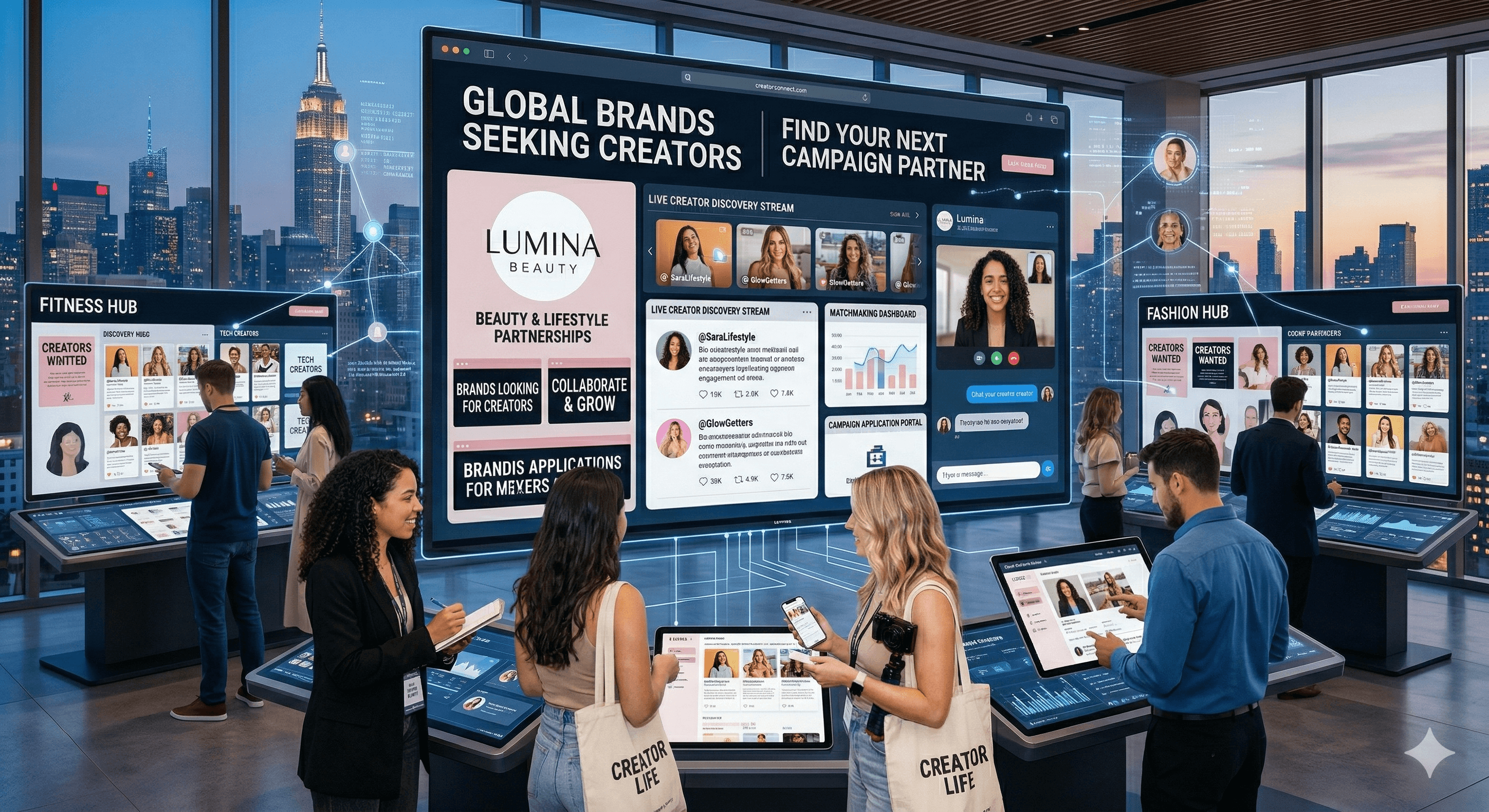
Most brands don't struggle to find creators. They struggle to find the right ones. Any influencer marketing platform will return thousands of results — but a list of creators who look good on paper is not the same as a list who will actually post, produce great content, and move the needle for your brand.
The difference between a campaign that delivers and one that falls flat almost always comes down to creator selection. And here's the uncomfortable truth most platforms won't tell you: the data powering most creator discovery tools is fundamentally broken. Scraped follower counts are stale within days. Estimated audience demographics are directionally useful at best, dangerously wrong at worst. Engagement rates calculated from public-only data miss the signals that actually predict whether a creator will post and whether their content will perform.
You don't need an agency to get creator selection right — you need a clear framework for what to look for, what to filter on, and how to vet beyond surface metrics. More importantly, you need access to the right data. First-party creator data — signals from creators who've opted in and connected their own accounts — is categorically more accurate than anything scraped from public profiles. That's not a small difference. It's the difference between guessing and knowing.
This is especially true for AI and tech companies, where the creator landscape is fragmented across platforms, the best creators often have smaller but higher-intent audiences, and traditional influencer marketing tools aren't built to surface them. This guide covers the universal framework — and then goes deep on what's different for tech brands specifically.
Start With Your Campaign Goals
Before you open a single creator discovery tool, get clear on what you're trying to achieve. Your goals should dictate your creator criteria — not the other way around.
Brand awareness campaigns should prioritize creators with high follower counts and strong recent view metrics. Engagement campaigns call for creators whose audiences actively comment, share, and save, even if the following is smaller. Product launches need creators who can coordinate around a specific timeline — consistency and responsiveness matter as much as reach. Sales-driven campaigns should layer in affiliate links or discount codes and prioritize creators with demonstrated conversion ability.
For AI/tech brands, awareness goals often look different: you might want to reach a specific technical community (AI engineers, SaaS buyers, startup founders) rather than a broad consumer audience. A creator with 15K deeply engaged followers in your exact niche is often more valuable than one with 500K general followers. Define who you're trying to reach before you define who you want to reach them.
Most campaigns serve multiple goals, but having a primary objective helps you make tradeoffs when the list starts taking shape.
The Filters That Actually Matter
Once you know what you're optimizing for, here's the creator selection criteria worth spending time on.
Content niche and brand affinity. The single most important filter — and the one most brands underweight. A creator who already talks about your product category will produce content that feels authentic. Audiences can immediately tell when an endorsement is forced. In real campaigns, the top-performing content consistently comes from creators with genuine category connection — not the biggest followings.
This is also where data quality matters most. Scraped influencer databases can tell you a creator posts about "tech" — but they can't tell you whether that creator has organically mentioned products like yours, whether their audience actually engages with product-related content, or whether they've demonstrated genuine brand affinity through their behavior (not just their bio). Platforms with first-party creator data — where creators have opted in and connected their accounts — can surface these signals. Platforms relying on scraped data cannot. That gap is the difference between a 30% post rate and a 70% post rate.
Audience demographics. A creator's followers need to overlap with your target customer. If 70% of their audience is outside your market, even great content won't convert. Check age, gender, location, and interest data where available — and be skeptical of where that data comes from. Estimated demographics from scraping tools are notoriously imprecise. First-party audience data from platforms where creators authenticate their own accounts is significantly more reliable.
Engagement rate on recent posts. Follower count tells you potential reach. Engagement rate tells you whether anyone's paying attention. Look at likes, comments, saves, and shares on the last 10–15 posts — recent performance matters more than lifetime stats. Well-matched gifted campaigns often see 5–15% engagement rates, significantly higher than paid social benchmarks.
Creator tier. Nano-creators (1K–10K followers) and micro-creators (10K–50K) tend to have higher engagement rates and more responsive audiences. Mid-tier creators (50K–500K) balance reach and authenticity. Macro creators deliver scale but are less likely to post from a gift alone. For most brands running their first creator campaign, weight your mix toward nano and micro.
Posting consistency and content quality. A creator with 50K followers who posts twice a month is a riskier bet than one with 15K who posts three times a week. Look at the actual content, not just the numbers — does this person produce work you'd want associated with your brand?
The Vibe Check: What Data Can't Tell You
After the quantitative filters, watch a few of the creator's recent videos. Read their captions. Look at how they interact with their audience. Ask yourself: does this person's voice, aesthetic, and energy feel like a natural fit for your brand? Would someone watching their content find your product surprising — or would it feel like it belongs?
This is where brands doing their own creator discovery have a real advantage over agencies. You know your brand's tone, values, and customer better than anyone. Five minutes of content review per creator saves hours of wasted outreach — and it's the step most agencies skip because it doesn't scale.
Finding Creators for AI and Tech Brands
This is where the playbook diverges significantly from consumer verticals. The creator ecosystem for tech is growing fast, but it's distributed across different platforms, the creator profiles look different, and the discovery methods need to be adapted.
Where Tech Creators Actually Live
Traditional influencer platforms are built for Instagram and TikTok. Most of the best tech creators aren't primarily on those platforms — or if they are, their best content is elsewhere.
YouTube is the #1 platform for tech creator content. Long-form reviews, tutorials, product walkthroughs, and "day in the life" developer videos perform well and have long shelf lives. A single YouTube review of your product can drive traffic for months. Look for creators who already review tools in your category — developer tools, AI products, productivity software, or SaaS platforms.
LinkedIn is increasingly where B2B tech creators build audiences. Thought leadership posts, product deep dives, and industry analysis reach decision-makers directly. LinkedIn content has a 48-72 hour engagement window (vs. Instagram's ~6 hours), and the audience skews toward people who actually make purchasing decisions.
X (Twitter) is where tech conversations happen in real time. Product launches, hot takes, threads breaking down how a tool works — X is where early adopters and influential engineers discover new products. Creators with 5K–50K followers on X often have more influence on tech purchasing decisions than Instagram creators with 500K.
Substack and newsletters are where in-depth tech analysis lives. Newsletter writers who cover AI, developer tools, or SaaS often have small but extremely high-value subscriber bases — these are people who specifically opted in to read about your product category.
Developer communities — GitHub, Discord servers, Reddit (r/programming, r/MachineLearning, r/SaaS), Hacker News, and Stack Overflow — are where technical credibility is built. Creators who are active in these spaces bring an authenticity that's hard to replicate.
Podcasts — tech and AI podcasts are an underutilized channel for creator partnerships. Podcast hosts and regular guests often have strong, trust-based relationships with their audience. A mention on a well-targeted tech podcast can drive more qualified traffic than thousands of social impressions.
What to Look For in a Tech Creator
The filters are the same in principle, but the signals you're evaluating are different:
Technical credibility over production value. In beauty, production quality is table stakes. In tech, the audience cares more about whether the creator actually understands the product. A screen-recorded walkthrough with genuine insight will outperform a polished but shallow video every time. Check: does this creator go deep, or are they summarizing press releases?
Audience seniority and role. This matters more in tech than in any other vertical. A creator whose audience is mostly junior developers is a different asset than one whose audience is VPs of Engineering and CTOs. Both are valuable — but for different campaign goals. Unfortunately, most influencer platforms can't tell you this. You'll need to look at comment quality, who's reposting, and what companies/roles are engaging.
Multi-platform presence. The best tech creators often maintain a presence across YouTube + X + LinkedIn (or YouTube + newsletter + podcast). A creator who's active on multiple platforms gives your campaign more surface area — and the content repurposes across channels naturally.
Review history and integrity. Tech audiences are deeply skeptical of paid promotion. Creators who have a track record of honest, balanced reviews — including pointing out weaknesses — are far more valuable than those who only post positive sponsored content. The audience trust is worth more than the individual post.
Community engagement. Does the creator respond to comments? Host AMAs? Maintain a Discord or community? Creators with active two-way relationships with their audience drive higher conversion because there's a trust layer that passive consumption doesn't build.
Where to Discover Tech Creators (Specific Tactics)
Search YouTube for "[your category] review" or "[competitor] tutorial." This surfaces creators who already produce the content format you want, in the product space you care about. Check their subscriber count, view-to-subscriber ratio, and comment quality.
Search X for people who regularly post about your product category. Use X's advanced search to find accounts that mention relevant terms (your product name, competitor names, category keywords) and have meaningful engagement on those posts.
Browse "awesome" lists and curated directories. The tech community loves curated lists. GitHub awesome lists, "best [category] tools" roundups on newsletters, and "tools I use" blog posts from respected engineers often surface creators indirectly — the people writing and curating these lists are often creators themselves.
Check who's speaking at conferences. Conference speakers in your product category — from small meetups to events like re:Invent, Google I/O, or AI-focused conferences — often have creator-adjacent audiences and credibility.
Look at who your competitors are working with. Search "[competitor] + review" or "[competitor] + sponsored" on YouTube and X. The creators already reviewing competitors are warm leads — they understand the category and their audience is already interested.
Where to Find Creators (Universal Tactics)
These apply regardless of your vertical:
Your own customers and followers. Some of the best creators for your brand are already fans. Check who's tagging you, commenting on your posts, or creating content about your products organically. These creators have built-in brand affinity — and their content will feel native because it already is.
Platform-native search. Instagram's and TikTok's search and explore features are underrated for creator discovery. Search relevant hashtags, browse trending content in your category, and look at who's tagging competitors.
Creator discovery platforms. Tools with large creator databases let you filter by follower count, engagement rate, audience demographics, and content category. They're useful for sourcing at scale — but treat them as a starting point, not a final answer. The quantitative filters narrow the field; you still need the vibe check. A critical distinction: platforms that rely on scraped public data give you a guess about a creator's audience and performance. Platforms built on first-party data from opted-in creators — like Beacons' database of 7M+ creator profiles with authenticated account data — give you verified signals including real engagement breakdowns, content performance by type, and brand affinity based on what creators actually feature. When you're spending real budget on a campaign, the accuracy of your sourcing data is the single biggest lever on ROI.
Creator-to-creator similarity. Once you've found one creator who's a great fit, look at who else makes similar content — tagged collaborators, accounts they follow, accounts their audience follows. Great creators tend to cluster.
Common Mistakes
Optimizing for reach alone. A single well-matched creator can outperform dozens of mismatched ones with bigger audiences. Affinity beats reach every time.
Casting too wide a net. 30 well-curated creators will outperform 300 random ones. Volume without meaningful curation produces a spreadsheet, not a strategy.
Ignoring responsiveness signals. A creator's willingness to engage — responding to outreach, completing onboarding, following through — is one of the strongest predictors of campaign success. Creators who are already active on a platform and have participated in previous collaborations dramatically outperform cold contacts, with posting rates up to 8× higher.
Using the wrong platforms to find tech creators. If you're an AI company using an Instagram-first influencer platform to find creators, you're fishing in the wrong pond. The best tech creators are on YouTube, LinkedIn, X, and in developer communities — and many aren't indexed by traditional influencer marketing tools at all.
Evaluating tech creators on consumer metrics. Follower count and engagement rate are proxies. For tech creators, what matters more is: does their audience match your buyer persona, do they produce content with genuine technical depth, and do they have a reputation for honest reviews? A creator with 8K YouTube subscribers and a 15-minute average watch time on tool reviews is often more valuable than one with 200K subscribers and 45-second average watch time.
Trusting scraped data for high-stakes decisions. This is the mistake that costs brands the most money and they don't even realize it. Most influencer marketing platforms build their databases by scraping public profiles — pulling follower counts, estimating engagement rates from visible metrics, and approximating audience demographics from rough signals. This data is directionally useful for a first pass, but it's not accurate enough to base campaign investments on. Follower counts go stale. Engagement estimates miss private interactions. Audience demographics are guesses. The brands that consistently run high-performing creator campaigns are the ones using platforms with first-party data from creators who've opted in and connected their own accounts — because that data reflects what's actually happening, not what's publicly visible.
From Selection to Relationship
Finding creators is step one. The real value compounds when you pay attention to who posts without prompting, who produces the best content, and whose audience responds most enthusiastically. These are the creators worth investing in for longer-term partnerships — whether that's ongoing gifting, paid collaborations, affiliate programs, or brand ambassador roles.
For tech brands especially, the relationship path often looks different: gifted access → honest review → affiliate partnership → co-created content (webinars, tutorials, integrations). The best tech creator partnerships don't feel like sponsorships — they feel like collaborations between the creator and the product team. Some of the strongest creator relationships in tech start with the creator filing a bug report or requesting a feature, not with a PR email.
The brands that build the strongest creator rosters are the ones who invest in data accuracy from day one. When your sourcing is powered by first-party creator data — real engagement breakdowns, authenticated audience demographics, genuine brand affinity signals — every downstream decision gets better. Your hit rate on outreach goes up. Your post rates go up. Your content quality goes up. And your cost per result goes down. The data advantage compounds.
A strong creator discovery process doesn't just fill one campaign — it builds a roster that gets more valuable over time.
Ready to estimate the ROI of your next creator campaign? Book a free strategy call to talk through your plan with our team.
Frequently Asked Questions
How many creators should I evaluate before selecting my final list?
A good rule of thumb is to evaluate 3–5× the number of creators you plan to include in the campaign. For a 50-creator gifted campaign, review 150–250 profiles. This sounds like a lot, but once you have your filters dialed in, the initial pass is fast — you'll reject most within 30 seconds. The deeper vibe check only applies to the shortlist.
What's more important: follower count or engagement rate?
Engagement rate, every time — especially for gifted campaigns. A creator with 10K followers and an 8% engagement rate will typically outperform one with 100K followers and a 1% engagement rate on both content quality and post-campaign ROI. Follower count matters more for pure awareness plays, but even then, engaged followers are more valuable than passive ones.
How do I find creators for AI or developer tools specifically?
Start on YouTube (search "[your category] review" or "[competitor] tutorial"), X (look for accounts that discuss tools in your space), and LinkedIn (search for thought leaders in your product area). Developer communities on GitHub, Discord, and Reddit are also rich sources. Traditional Instagram-first influencer platforms will not surface these creators — you need to go where they are.
How do I vet tech creators when I can't rely on standard influencer metrics?
Watch their content. Read the comments. Check who's engaging (are they engineers? Product managers? Or general audiences?). Look at whether they go deep on products or just skim the surface. Check if they have a newsletter, podcast, or community. And most importantly: do they have a reputation for honest reviews? Tech audiences penalize creators who only say positive things.
Do I need an agency to run creator discovery?
No — and in many cases, you'll do it better yourself. Agencies add value for scale and when you need to move fast, but they rarely know your brand, product, and customer as well as you do. The vibe check — whether a creator's voice, aesthetic, and energy fit your brand — is something you're better positioned to evaluate than anyone outside your company. Start by doing it yourself; bring in an agency only if you need to scale beyond what your team can handle.
How is creator discovery different for B2B vs. B2C brands?
The framework is the same, but the platforms, signals, and creator profiles differ. B2C brands typically source from Instagram and TikTok, evaluating visual aesthetic and broad audience appeal. B2B brands — especially in AI and tech — should prioritize YouTube, LinkedIn, X, newsletters, and developer communities, evaluating technical depth, audience seniority, and review credibility. B2B creator audiences are smaller but higher-intent, which often means better conversion rates per impression.